Unemployed graduate
An unemployed graduate woke up one morning and checked his pocket.All he had left was $10. He decided to use it to buy food and then wait for death as he was too proud to go begging. He was frustrated as he could find no job; nobody was ready to help him.He bought food and as he sat down to eat, an old man and two little children came along and asked him to help them with food as they had not eaten for almost a week. He looked at them. They were so lean that he could see their bones coming out. Their eyes had gone into the socket.
With the last bit of compassion he had, he gave them the food. The old man and children prayed for him that will bless and prosper him and then gave him a very old coin. The young graduate said to them "you need the prayer more than I do". With no money, no job, no! food, the young graduate went under the bridge to rest and wait for death. As he was about to sleep, he saw an old newspaper on the floor. He picked it up, and suddenly he saw an advertisement for people with old coins to come to a certain address.
He decided to go there with the old coin the old man gave him. On getting to the place, he gave the proprietor the coin. Alas, the proprietor screamed, brought out a big book and showed the young graduate a photograph. This same old coin was worth $3M. The young graduate was overjoyed as the proprietor gave him a bank draft for $3M within an hour. He collected the Bank Draft, went in search of the old man and little children.
By the time he got to where he left them eating, they had gone. He inquired from the owner of the canteen who told him that they even left a note for him. He quickly opened the note thinking it would lead him to find them. But alas, the words in the note reads thus:
You gave us your all and we have rewarded you back with the coin"
Signed
Almighty
Have you given all to Almighty? If you haven't, do so today and he will surprise you.
PRAYER:
Here is your financial blessing! It's a simple prayer, you got 30 seconds?
If you need a financial blessing, continue reading this email.
Dear Almighty, most Gracious and Loving God, I pray to you that you abundantly Bless my family and me. I know that You recognize, that a family is more than just a mother, father, sister, brother, husband and wife, but all who believe and trust in you. Dear Almighty , I send up a prayer request for financial blessing for not only the person who sent this to me, but for Me and all that I have forwarded this message on to. And that the power of joined prayer by those who believe and trust in you is more powerful than anything. I thank you in advance for your blessings.
Dear Almighty, deliver the person reading this right now and those who will read it in the near future from debt and debt burdens. Release your Godly wisdom that I may be a good steward over all that You have given me Almighty, for I know how wonderful and mighty You are and how if we just obey you and walk in your word and have the faith that You will pour out blessings. I thank you now God for the recent blessings I have received and for the blessings yet to come, because I know You are not done with me yet. In Almighty's name, I pray, Ameen .
Say a prayer for the one who sent you this email to be prosperous!
"Courage is resistance to fear, mastery of fear - not absence of fear. "
A perfect summer day is when the sun is shining, the breeze is blowing, the birds are singing, and the lawn mower is broken.
- James Dent
Wednesday, June 28, 2006
Monday, June 26, 2006
Noble News : Buffett gives $37 billion to Gates and family foundations
By Robert MacMillan and Mark McSherry 1 hour, 42 minutes ago
NEW YORK (Reuters) - Warren Buffett, the world's second-richest person, is donating about $37 billion -- more than 80 percent of his fortune -- to foundations run by his friend Bill Gates and by the Buffett family.
The move is the biggest-ever single act of charitable giving in the United States.
Sunday's announcement by Buffett, 75, comes just days after Microsoft Chairman Gates said he would move away from his day-to-day role at the software giant to focus more on charity work, and highlights the close friendship of the world's two richest men.
Gates, 50, is a bridge partner of Buffett's and a director of Berkshire Hathaway, Buffett's investment firm. Buffett serves on the board of the Washington Post Co. with Gates' wife Melinda.
In a letter to the Bill and Melinda Gates Foundation, Buffett, said he will set aside 10 million shares of Berkshire class B common stock for the foundation.
Based on the stock's per-share price of $3071.01 as of Friday, the total amount for the Gates foundation comes to about $30 billion.
That is the largest commitment to a philanthropic cause ever made by one person in the United States, said Stacy Palmer, editor of the Chronicle of Philanthropy.
"Even if you look at what (John D.) Rockefeller and (Andrew) Carnegie gave historically -- even if you do it in today's numbers, it doesn't come close to that," she said.
The Gates foundation is one of the world's richest philanthropic organizations.
It has committed millions of dollars to fighting diseases such as malaria and tuberculosis in developing countries, and to education and library technology in the United States.
HUMBLE
Buffett, chief executive of Berkshire Hathaway, is worth an estimated $44 billion, according to Forbes magazine. That makes him the world's second-richest man behind Gates, who is worth about $50 billion.
Buffett took over Omaha, Nebraska-based Berkshire in 1965, and has transformed it from a struggling textile maker into a $141.8 billion company with investments in undervalued securities and purchases of well-managed, easy-to-understand businesses.
Its stock investments include blue-chip names such as Coca-Cola Co. and Procter & Gamble Co. Berkshire also owns some 50 businesses, including Geico auto insurance, Benjamin Moore paint and Dairy Queen ice cream.
In a letter to Gates and his wife, Buffett wrote: "You have committed yourselves to a few extraordinarily important but underfunded issues, a policy that I believe offers the highest probability of your achieving goals of great consequence."
Gates and his wife said in a statement on their foundation's Web site: "We are awed by our friend Warren Buffett's decision to use his fortune to address the world's most challenging inequities, and we are humbled that he has chosen to direct a large portion of it to the Bill & Melinda Gates Foundation."
Buffett also pledged 1 million shares to a foundation established by himself and his late wife, Susan Thompson Buffett, and 350,000 shares each to the foundations of children Howard, Susan and Peter.
In letters to the recipients, Buffett said he will award the gifts every year for the rest of his life.
Buffett is in "excellent health," he wrote to the Gates foundation, but said he is writing a new will to ensure that the stock is distributed after his death.
Friday, June 23, 2006
Sleep On It – By Holleay Parcker
Old enough to have my own problems, yet yöung enough to believe my father’s word without question, as a child, I spent countless evenings seeking his advice. At 6 P.M., I’d sit at the kitchen table, facing the back door. I wanted to be first to present my concerns to him. It was always a short wait. Like clockwork, my father walked through the door at 6:15.
He sat beside me, patiently listening and sometimes asking questïons. A man of few words, Dad’s answer to all of my dilemmas was simply, “I think you should sleep on it.” For many years it was a familiar routine. I talked. Dad listened. Then came his advice: “Sleep on it.”
One day, my teenäge frustration got the better of me, and I could stand it no longer. “How will sleeping on it help, Dad? What does that solve, anyway? Don’t you understand? I have this problem, and I need an answer, now.”
My father was silent. He looked at me, and in that moment I could see that he was making a decision. I grew quiet, realizing that something important was about to happen.
Then, Dad said, “I think you’re old enough now to understand this concept. Let me give you an example. Last night, I was working on my model ship.
Often, the kits come incomplete. Parts are missing, the instructions are in disarray or, even worse, inaccurate. Assembling the model itself is challenging enough, but when you run into problems of this nature... well, I find that I end up having to improvise quite a bit.
“There’s a certain point in building the model where you have to proceed very carefully. A wrong move can mean lots of wasted time and energy. I could try to explain what the problem was, but since you’re unfamiliar with model ships ...the point is, I was perplexed. I just couldn’t figure out the next step, no matter how hard I tried.
“When I went to bed last night, I thought again about the situation. And then I asked for the solution to the problem to come to me while I was sleeping.”
“Who did you ask, Dad? Who were you talking to?” I interrupted.
“Well, I believe that we all have the answers within us. When we listen, we can hear the answers. And you know what? I woke up about two in the morning with the solution! I don’t know why I hadn’t seen it before. It may seem really simple, but it works. I’ve found answers to all kinds of problems this way. I could tell you about times when your mother and I have had difficult decisions to make, or I’ve been worried over something at work.
“When you’re faced with a problem and need a solution, sleep on it. Ask for the solution to come to you. It can’t hurt, and it just might help. It sure works for me.”
“I think you need to sleep on it” has proven to be among the best advice Dad’s ever given me. Over the years I’ve used this simple technique in a variety of ways.
Early on, I found great benefit simply by distancing myself from the problem. By allowing it to marinate overnight, meat is tenderized. By allowing a problem to marinate for a few hours, often, its “toughness” is reduced as well, and sometimes, the problem even resolves itself completely! Other times, I wake up with an “ah-ha” experience, where the solution is laid out before me. Just like my father, I wonder why I hadn’t seen it before. It seems so simple when you know how.
Recently, I’ve discovered a brand new use for this technique: inspiration! I don’t always have to have a problem that needs solving; it’s okay to ask for inspiration as well! I stumbled onto this discovery through a real estate deal. I’d purchased a fixer-upper, and boy, did it need fixing up, from new siding and windows to all new flooring and furniture and everything in between. It took several months to renovate. When it was finished, I looked around and said to myself, “You know, this is good. Really good.”
Then, I went outside and under the house to the pool area. (I live in a coastal community, and the houses here are built on pilings.) I saw that it was bad. Beyond bad. Awful, really. All the magic was inside the house! I needed magic under the house, too, but the months of renovations had exhausted me. I was worn out and weary, clueless as to what the right touch was or even how to approach it.
It had been a difficult day, and a long one. I flung myself onto the bed that night, too tired to undress. Frustrated, I called out, “I want a fabulous tiki bar. I don’t know how to begin. I cannot see what to do. I need inspiration. Show it to me, show it to me, please.”
Then, I fell into a deep sleep.
I awoke at 3:30 A.M. I had had the most wonderful dream! I’d seen how to do it; I saw the tiki bar built and painted. The underpinning was alive, the colors of a tropical sky in Caribbean blues and blue-greens. The pilings around the pool had been transformed into palm trees, the tops of the trees painted on the underpinning as though they were swaying in the gentle midsummer’s breeze. Toucans, parrots, macaws, and cockatoos sat perched on the branches in the trees or peeking through the colorful foliage near the bottom.
The outdoor showër nearly glowed in lime green, pink, and purple hues. Inside the showër a mermaid beckoned, an octopus guarded a treasure chest, a seahorse swam lazily by, and a dolphin leapt. Deeper blues and greens striped the outside of the bar, and inside, splashes of bold green and orange, red and yellow.
There was more. Much more.
I hardly slept the rest of the night. At the paint store early the next morning I had a list of colors to mix. The trunk of my car loaded down with paint, I went to work. After the background colors were finished I hired a local artist to paint what I had seen. Each day, a new idea would come. The more I turned my thoughts to it and reflected on the tiki bar, the more I was deluged with even better ideas!
When it was completed, I looked around, amazëd at the result--it really was fabulous! I’m filled with wonder at the inspiration and creativity that was just waiting to be tapped into...when I chose to “sleep on it.”
About the Author:
This article was written by Holleay T. Parcker, contributing author to "101 Great Ways to Improve Your Life." Holleay is a realtor who believes that great success in the real estate world is directly proportional to using the power of intuition. To learn more, and to see a picture of the tiki bar described above, visit http://www.RealEstateIntuition.com
Her article above is one of 101 great chapters that can be found in "101 Great Ways to Improve Your Life." This powerful compilation book with Zig Ziglar, Brian Tracy, Jim Rohn, and Denis Waitley contains 101 chapters of proven advice on how to improve your life.
He sat beside me, patiently listening and sometimes asking questïons. A man of few words, Dad’s answer to all of my dilemmas was simply, “I think you should sleep on it.” For many years it was a familiar routine. I talked. Dad listened. Then came his advice: “Sleep on it.”
One day, my teenäge frustration got the better of me, and I could stand it no longer. “How will sleeping on it help, Dad? What does that solve, anyway? Don’t you understand? I have this problem, and I need an answer, now.”
My father was silent. He looked at me, and in that moment I could see that he was making a decision. I grew quiet, realizing that something important was about to happen.
Then, Dad said, “I think you’re old enough now to understand this concept. Let me give you an example. Last night, I was working on my model ship.
Often, the kits come incomplete. Parts are missing, the instructions are in disarray or, even worse, inaccurate. Assembling the model itself is challenging enough, but when you run into problems of this nature... well, I find that I end up having to improvise quite a bit.
“There’s a certain point in building the model where you have to proceed very carefully. A wrong move can mean lots of wasted time and energy. I could try to explain what the problem was, but since you’re unfamiliar with model ships ...the point is, I was perplexed. I just couldn’t figure out the next step, no matter how hard I tried.
“When I went to bed last night, I thought again about the situation. And then I asked for the solution to the problem to come to me while I was sleeping.”
“Who did you ask, Dad? Who were you talking to?” I interrupted.
“Well, I believe that we all have the answers within us. When we listen, we can hear the answers. And you know what? I woke up about two in the morning with the solution! I don’t know why I hadn’t seen it before. It may seem really simple, but it works. I’ve found answers to all kinds of problems this way. I could tell you about times when your mother and I have had difficult decisions to make, or I’ve been worried over something at work.
“When you’re faced with a problem and need a solution, sleep on it. Ask for the solution to come to you. It can’t hurt, and it just might help. It sure works for me.”
“I think you need to sleep on it” has proven to be among the best advice Dad’s ever given me. Over the years I’ve used this simple technique in a variety of ways.
Early on, I found great benefit simply by distancing myself from the problem. By allowing it to marinate overnight, meat is tenderized. By allowing a problem to marinate for a few hours, often, its “toughness” is reduced as well, and sometimes, the problem even resolves itself completely! Other times, I wake up with an “ah-ha” experience, where the solution is laid out before me. Just like my father, I wonder why I hadn’t seen it before. It seems so simple when you know how.
Recently, I’ve discovered a brand new use for this technique: inspiration! I don’t always have to have a problem that needs solving; it’s okay to ask for inspiration as well! I stumbled onto this discovery through a real estate deal. I’d purchased a fixer-upper, and boy, did it need fixing up, from new siding and windows to all new flooring and furniture and everything in between. It took several months to renovate. When it was finished, I looked around and said to myself, “You know, this is good. Really good.”
Then, I went outside and under the house to the pool area. (I live in a coastal community, and the houses here are built on pilings.) I saw that it was bad. Beyond bad. Awful, really. All the magic was inside the house! I needed magic under the house, too, but the months of renovations had exhausted me. I was worn out and weary, clueless as to what the right touch was or even how to approach it.
It had been a difficult day, and a long one. I flung myself onto the bed that night, too tired to undress. Frustrated, I called out, “I want a fabulous tiki bar. I don’t know how to begin. I cannot see what to do. I need inspiration. Show it to me, show it to me, please.”
Then, I fell into a deep sleep.
I awoke at 3:30 A.M. I had had the most wonderful dream! I’d seen how to do it; I saw the tiki bar built and painted. The underpinning was alive, the colors of a tropical sky in Caribbean blues and blue-greens. The pilings around the pool had been transformed into palm trees, the tops of the trees painted on the underpinning as though they were swaying in the gentle midsummer’s breeze. Toucans, parrots, macaws, and cockatoos sat perched on the branches in the trees or peeking through the colorful foliage near the bottom.
The outdoor showër nearly glowed in lime green, pink, and purple hues. Inside the showër a mermaid beckoned, an octopus guarded a treasure chest, a seahorse swam lazily by, and a dolphin leapt. Deeper blues and greens striped the outside of the bar, and inside, splashes of bold green and orange, red and yellow.
There was more. Much more.
I hardly slept the rest of the night. At the paint store early the next morning I had a list of colors to mix. The trunk of my car loaded down with paint, I went to work. After the background colors were finished I hired a local artist to paint what I had seen. Each day, a new idea would come. The more I turned my thoughts to it and reflected on the tiki bar, the more I was deluged with even better ideas!
When it was completed, I looked around, amazëd at the result--it really was fabulous! I’m filled with wonder at the inspiration and creativity that was just waiting to be tapped into...when I chose to “sleep on it.”
About the Author:
This article was written by Holleay T. Parcker, contributing author to "101 Great Ways to Improve Your Life." Holleay is a realtor who believes that great success in the real estate world is directly proportional to using the power of intuition. To learn more, and to see a picture of the tiki bar described above, visit http://www.RealEstateIntuition.com
Her article above is one of 101 great chapters that can be found in "101 Great Ways to Improve Your Life." This powerful compilation book with Zig Ziglar, Brian Tracy, Jim Rohn, and Denis Waitley contains 101 chapters of proven advice on how to improve your life.
Tuesday, June 20, 2006
Mothers Against Drunk Driving
Mothers Against Drunk Driving is aiming to get 5000 signatures on this. If you believe against drunk driving, do us all a favor and send this to others :
WENT TO A PARTY, MUM
I
wish that you could hold me Mom,
As I lie here and die. I wish that I could say,
"I love you, Mom!" So I love you and
good-bye.
MADD (Mothers Against Drunk Drivers) IS HOPING TO GET
5,000
SIGNATURES ON THIS,THEN PASS IT ON TO SIGN.
When this petition has reached 5,000, please return it to:
MADD
P.O. Box 541688
Dallas, TX75354-1688
1-800-GET-MADD (1-800-438-6233)
WENT TO A PARTY, MUM
(Please read all the way to the bottom and sign your
name)
I
went to a party,
And remembered what you said. You told me not
to drink, Mom So I had a sprite instead.
I
felt proud of myself,
The way you said I would, That I didn't drink
and drive, Though some friends said I should.
I
made a healthy choice,
And your advice to me was right, The party finally
ended, And the kids drove out of sight.
I
got into my car,
Sure to get home in one piece, I never knew
what was coming, Mom Something I expected
least.
Now
I'm lying on the pavement,
And I hear the policeman say, The kid that
caused this wreck was drunk, Mom, his voice
seems far away.
My
own blood's all around me,
As I try hard not to cry. I can hear the
paramedic say, This girl is going to die.
I'm
sure the guy had no idea,
While he was flying high, Because he chose to
drink and drive, Now I would have to die.
So
why do people do it, Mom
Knowing that it ruins lives? And now the pain
is cutting me, Like a hundred stabbing knives.
Tell
sister not to be afraid, Mom
Tell daddy to be brave, And when I go to
heaven, Put " Mommy 's Girl" on my
grave.
Someone should have taught him,
That it's wrong to drink and drive. Maybe if
his parents had, I'd still be alive.
My
breath is getting shorter, Mom
'm getting really scared. These are my final
moments, And I'm so unprepared.
I
wish that you could hold me Mom,
As I lie here and die. I wish that I could say,
"I love you, Mom!" So I love you and
good-bye.
MADD (Mothers Against Drunk Drivers) IS HOPING TO GET
5,000
SIGNATURES ON THIS,THEN PASS IT ON TO SIGN.
When this petition has reached 5,000, please return it to:
MADD
P.O. Box 541688
Dallas, TX75354-1688
1-800-GET-MADD (1-800-438-6233)
How Do You Find The Density of Air?
The density of air under standard conditions
is only 1.239 milligrams per cubic centimeter under standard conditions.
Measuring the density is done by finding the mass of an evacuated glass
sphere, letting the air back into the sphere, and finding the new mass.
This is done with the sphere on one pan of an equal-arm balance. The outside
diameter of the sphere is then measured, the thickness of the wall estimated,
as well as the volume of the neck, and the volume of the air computed.

is only 1.239 milligrams per cubic centimeter under standard conditions.
Measuring the density is done by finding the mass of an evacuated glass
sphere, letting the air back into the sphere, and finding the new mass.
This is done with the sphere on one pan of an equal-arm balance. The outside
diameter of the sphere is then measured, the thickness of the wall estimated,
as well as the volume of the neck, and the volume of the air computed.
Sometimes smaller, metallic spheres were used in this experiment.
An example can be seen mounted on the vacuum
pump in the Kenyon College collection.
This apparatus at the right is at St. Mary's College in Notre Dame,
Indiana. There is no maker's mark.
Monday, June 19, 2006
An Explanation on the Airbus Crisis
Although the EADS co-CEO admitted that there's a crisis that led to Airbus to scale back on its expected delivery of 25 A380 to just 9, he says the problem runs all through EADS and not just Airbus. But he didnt mention what the crisis was.
Read his article below :
http://today.reuters.co.uk/News/newsArticle.aspx?type=businessNews&storyID=2006-06-18T141414Z_01_PAC006510_RTRUKOC_0_UK-TRANSPORT-EADS.xml
Read his article below :
http://today.reuters.co.uk/News/newsArticle.aspx?type=businessNews&storyID=2006-06-18T141414Z_01_PAC006510_RTRUKOC_0_UK-TRANSPORT-EADS.xml
Sunday, June 18, 2006
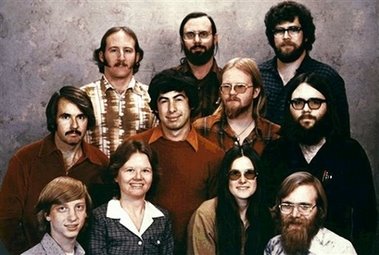
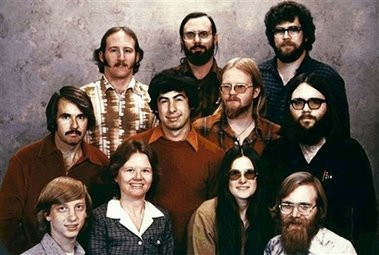
Microsoft Founders
This 1978 file photo made available by Microsoft Corp. shows the 11 people who started Microsoft. The photo was taken in Albuquerque, N.M., just prior to moving the company to the Seattle area. Shown top row, from left, are: Steve Wood, Bob Wallace and Jim Lane; second row, Bob O'Rear, Bob Greenberg, March McDonald and Gordon Letwin; and front row, Bill Gates, Andrea Lewis, Marla Wood and Paul Allen. Gates announced Thursday, June 15, 2006, that he will transition from day-to-day responsibilities at the company to concentrate on the charitable work of the Bill & Melinda Gates Foundation. Gates will continue as the company's chairman after transferring his duties over a two-year period. (AP Photo/Microsoft Corp., Ho, file)


Friday, June 16, 2006
John A. Swanson - The Authority in Finite Element Methods!
John A. Swanson, president of the finite-element consulting firm
Swanson Analysis Services, Inc., and a resident of The Villages, Fla.,
is recognized internationally as an authority and innovator in the
application of finite-element methods to engineering.
In 1970-only four
years after he graduated from the Pitt School of Engineering with the
Ph.D. degree in applied mechanics-Swanson founded ANSYS, Inc., to
develop, support, and market the ANSYS program, a finite-element
software code he created that is used by a broad spectrum of industries
employing computer-aided engineering, among them the aerospace,
automotive, biomedical, manufacturing, and electronics industries.
Swanson served ANSYS as president, chief executive officer, and
director; at his retirement from ANSYS in March 1999, he was the
company's chief technologist. Headquartered in Canonsburg, Pa., with
more than 40 sales locations worldwide, ANSYS and its subsidiaries
today employ approximately 1,400 people and distribute products through
a network of channel partners in more than 40 countries.

Prior
to founding ANSYS, Swanson was employed at Westinghouse Astronuclear
Laboratory in the stress analysis group in reactor design, the core
analysis and methods group, and the structural analysis group. It was
at Westinghouse that Swanson realized the significant resources
companies could save by using integrated general-purpose finite-element
software code to do the complex calculations engineers were then doing
manually.
In May 2004, Swanson was given what is considered to
be the highest award in the engineering profession, the American
Association of Engineering Societies' John Fritz Medal. Prior awardees
of the Fritz Medal include, among others, Orville Wright, Alexander
Graham Bell, Alfred Nobel, Thomas Edison, and George Westinghouse.
Swanson
has received many other prestigious honors throughout his career, among
them being named in 1986-87 Pittsburgh Engineer of the Year by the
American Society of Mechanical Engineers (ASME), winning in 1990 the
Computers in Engineering (CIE) award for outstanding contributions to
the engineering and computing industries, selection by Industry Week as
one of the Top 5 of the Top 50 R&D Stars in the United States in
1994, election as an ASME Fellow in 1994, and receipt of the ASME
Applied Mechanics Award in 1998 and ASME Honorary Membership in 2003.
A
loyal and generous Pitt alumnus, Swanson has created at the University
the John A. Swanson Institute for Technical Excellence, which houses
the John A. Swanson Center for Micro and Nano Systems; the John A.
Swanson Center for Product Innovation; and the RFID (Radio Frequency
Identification) Center for Excellence. He also has established the John
A. Swanson Embedded Computing Laboratory in Computer Engineering and
the John A. Swanson Fund in Pitt's School of Engineering. In 1998,
Swanson was named a Pitt School of Engineering Distinguished Alumnus
and, in 2002, was inducted into the Cathedral of Learning Society,
which recognizes individuals who have donated $1 million or more to the
University.
Swanson Analysis Services, Inc., and a resident of The Villages, Fla.,
is recognized internationally as an authority and innovator in the
application of finite-element methods to engineering.
In 1970-only four
years after he graduated from the Pitt School of Engineering with the
Ph.D. degree in applied mechanics-Swanson founded ANSYS, Inc., to
develop, support, and market the ANSYS program, a finite-element
software code he created that is used by a broad spectrum of industries
employing computer-aided engineering, among them the aerospace,
automotive, biomedical, manufacturing, and electronics industries.
Swanson served ANSYS as president, chief executive officer, and
director; at his retirement from ANSYS in March 1999, he was the
company's chief technologist. Headquartered in Canonsburg, Pa., with
more than 40 sales locations worldwide, ANSYS and its subsidiaries
today employ approximately 1,400 people and distribute products through
a network of channel partners in more than 40 countries.
John's on the left.
Prior
to founding ANSYS, Swanson was employed at Westinghouse Astronuclear
Laboratory in the stress analysis group in reactor design, the core
analysis and methods group, and the structural analysis group. It was
at Westinghouse that Swanson realized the significant resources
companies could save by using integrated general-purpose finite-element
software code to do the complex calculations engineers were then doing
manually.
In May 2004, Swanson was given what is considered to
be the highest award in the engineering profession, the American
Association of Engineering Societies' John Fritz Medal. Prior awardees
of the Fritz Medal include, among others, Orville Wright, Alexander
Graham Bell, Alfred Nobel, Thomas Edison, and George Westinghouse.
Swanson
has received many other prestigious honors throughout his career, among
them being named in 1986-87 Pittsburgh Engineer of the Year by the
American Society of Mechanical Engineers (ASME), winning in 1990 the
Computers in Engineering (CIE) award for outstanding contributions to
the engineering and computing industries, selection by Industry Week as
one of the Top 5 of the Top 50 R&D Stars in the United States in
1994, election as an ASME Fellow in 1994, and receipt of the ASME
Applied Mechanics Award in 1998 and ASME Honorary Membership in 2003.
A
loyal and generous Pitt alumnus, Swanson has created at the University
the John A. Swanson Institute for Technical Excellence, which houses
the John A. Swanson Center for Micro and Nano Systems; the John A.
Swanson Center for Product Innovation; and the RFID (Radio Frequency
Identification) Center for Excellence. He also has established the John
A. Swanson Embedded Computing Laboratory in Computer Engineering and
the John A. Swanson Fund in Pitt's School of Engineering. In 1998,
Swanson was named a Pitt School of Engineering Distinguished Alumnus
and, in 2002, was inducted into the Cathedral of Learning Society,
which recognizes individuals who have donated $1 million or more to the
University.
Wednesday, June 14, 2006
The Value of Time
To know the value of one year - Ask the student who failed their final.
To know the value of one month - ask the mother of a premature baby.
To know the value of one week - ask the editor of a weekly magazine.
To know the value of one day - ask the wager earner with six children.
To know the value of one hour - ask the lovers who are waiting to meet.
To know the value of one minute - ask the person who missed the plane.
To know the value of one second - ask the person who survived the accident.
To know the value of one millisecond - ask the Olympic silver medalist.
To know the value of one month - ask the mother of a premature baby.
To know the value of one week - ask the editor of a weekly magazine.
To know the value of one day - ask the wager earner with six children.
To know the value of one hour - ask the lovers who are waiting to meet.
To know the value of one minute - ask the person who missed the plane.
To know the value of one second - ask the person who survived the accident.
To know the value of one millisecond - ask the Olympic silver medalist.
How to Remove Active Desktop in Windows XP
The desktop is an integral component of the Windows operating system
and cannot be removed. However, you do have the option of disabling the
resource-hungry Active Desktop and using the classic user interface
instead. The biggest advantage of doing this is that your PC will feel
much snappier. Unfortunately, it is much harder to disable the Active
Desktop in Windows XP than it was in previous versions of the operating
system - it requires a change to the registry.
To open the registry editor, go to "Start, Run", type regedit
and hit "OK". Find the entry
"HKEY_CURRENT_USER\Software\Microsoft\Windows\CurrentVersion\Policies\Explorer"
and create the DWORD values ForceActiveDesktopOn and NoActiveDesktop
. To do so, right-click into the right-hand window and select "New,
DWORD". Then change the binary value of the registry key called
"ForceActiveDesktopOn" to 0 and that of "NoActiveDesktop" to 1. Now
quit the program and restart your computer.
Warning: Manipulating the registry can easily damage your installation of Windows. It is crucial that you create a backup
copy of your registry before making any changes to the Windows
registry. Once again, open the registry editor as described above and
go to "File, Export". Choose a memorable name for your backup file,
select a suitable destination on your hard drive and click "Save".
Sunday, June 11, 2006
How to Get Famous -- In only 90 Days!
by Joe Vitale
"I am indebted to the press of the United States for almost every dollar which I possess..." -- P.T. Barnum, 1891
Charlie Stratton was a little boy who would not grow. He was destined to be less than three feet tall.
His parents accepted the fact that he would n'ever become a full sized adult. The neighbors felt sorry for the nice family and their midget. But no one saw an o'pportunity for greatness. No one saw the potential for fame and fortune. No one, that is, until one man came along in 1842 with an eye for hidden possibilities. That man was P.T. Barnum.
Barnum taught the child to sing and dance. He taught him to express himself, to accept how he looked, to feel good about who he was. He also taught the boy how to charm and entertain crowds. And he named the y'oung prodigy a name that still lives today: General Tom Thumb.
Years later, after Tom was rich and world famous, his Connecticut neighbors would shake their heads and smile. "We always thought little Charlie was a nice boy but not very special," many said, "but we n'ever knew he would become a celebrity until Barnum took him and Barnumized him."
P.T. Barnum took many people who were talented but unknown and made them rich and famous. While Jenny Lind was known as the greatest Swedish soprano in all of Europe, few had any idea who she was in America. Yet Barnum hired her, managed her, promoted her, and Jenny Lind became so famous that 30,000 people met her ship when it docked in New York in the mid 1800s. Again, Barnum had practiced the art of "Barnumizing" someone.
And to prove that his techniques worked, when Lind decided to save m'oney and manage her own concerts without Barnum's help, her crowds grew smaller. Lind didn't get media attention. And she returned to Europe without fanfare. Yet it was the same Jenny Lind that the crowds had gone wild to see under Barnum's art!
That art is not lost today, of course. Throughout 1997 I smiled whenever I saw an article on the singer Jewel. H'ere you have a woman barely out of her teens, with only one CD released at the time, making front page headlines and cover stories on national magazines. Last I heard she had been hired to write her autobiography (!) and was paid more than a million dollars for it. Yet Jewel is barely an adult! How is this happening? Clearly, Jewel is being Barnumized.
And that's how anyone can become famous today. You need someone skilled in the art of Barnumizing. There should be a latent talent or trait that can be publicized, of course, but even that can be gotten around. Richard Branson, the tycoon founder of many businesses, including Virgin Records and Virgin Airlines, Barnumizes himself by creating balloon flights around the world. Whether he actually succeeds at the trip doesn't matter. His events bring himself international publicity. And he is not promoting any talent except maybe the bold desire to be famous.
I've been personally fascinated by publicity and publicists since I began researching P.T. Barnum a few years ago. Here's a taste of some of the people I've discovered:
* Harry Reichenbach was an audacious silent movies publicist who made people famous in the early 1900s. In fact, his i'ncredible creative ideas helped stop World War I.
* Edward L. Bernays helped make such stars as the singer Caruso famous. And he got American women to smoke with a publicity event he helped orchestrate in 1929.
* And publicists today continue to Barnumize people like chicken soup authors Mark Victor Hanson and Jack Canfield. One reason Deepak Chopra remains a bestselling author is the publicist behind him: Arielle Ford.
But let's forget actors and actresses, authors and speakers, singers and celebrities for a moment. What about the average person? What about you? Can you be Barnumized? Can you be made famous?
Without hesitation, I say yes. The s'ecret is in hiring a publicist who knows how to find or create a news worthy subject out of you or something you do.
There isn't any one way to fame that fits for all people. Sometimes all you need is one wild event to draw attention to everything else you do:
* Barnum once showed a preposterous "Fejee Mermaid." The curious half-monkey-half fish increased his ticket s'ales 33%.
* In our own century a circus once displayed a "Unicorn." While everyone knows unicorns aren't real, ticket s'ales increased 55%. Again, the one publicity stunt drew crowds to see everything else being offered.
But you don't have to be wild and crazy to get attention. In an article I wrote titled "Hidden Selling," I talk about the various people who are getting rich and famous by sponsoring events that serve a good cause. Bill Phillips, for example, is selling people on the idea of getting fit. He gives away his book, and a video, and holds yearly contests. He donates his m'oney to the Make-A-Wish Foundation. All of this is making Bill internationally famous. How does he make any m'oney? He sells nutritional supplements. Back this fact is "hidden." What Bill is doing is getting fame, and then using that fame to make m'oney. Very, very smart.
One of the easiest ways to begin to seek fame is to write a book. You still have to promote the book, of course, but as an author you have an excuse to get publicity. That's what Evel Knievel wanted when he called me. He wanted me to help him write his life story. He knew that a book could bring him more fame. (I turned him down.) Many other people know this fact, too, from Donald Trump to J. Paul Getty to Madonna, and that's why they write (or hire someone to write) books for them.
By n'ow you've heard the quote from Andy Warhol that in the future everyone will be famous for 15 minutes. My belief is that if you create fame for yourself that sticks, that fame will be a credential you can bank on for the rest of your life.
Take Evel Knievel. His publicity stunts Barnumized him in the 1970s. Yet we still know his name today, thirty years later. He wedged his name into public awareness through his fame tactics. And he's still cashing in on his name. In fact, his name is so strong that it has helped launch the career of another daredevil: Evel's own son, Robbie Knievel.
Most people know the name Tom Thumb today, as well. Why? The fame Barnum created for his little friend still lives. Fame can do that for you, too. It can become a lasting advertisement for who you and what you do. From then on, everything you touch will get automatic attention. Tom Thumb used to sell toys and other products. So did Evel Knievel. As a result of their fame, these otherwise mediocre products sold. The products weren't important, it was the name associated with the products. The more famous the name, the more easily the products sold. That's why Pepsi hires the latest hot stars to appear in their commercials. Their fame brings favorable attention to Pepsi.
But what if you can't afford a publicist? Easy. What you have to do is become your own publicist and Barnumize yourself.
Let me explain:
A year or so ago I wrote a news release that helped make Jeff DeLong---barely 28 years old---wealthy. The headline read:
50 Ways to Leave Your L'over (or anyone else); Unusual cards don't greet, say Hit The Streets
Paul Krupin of the ImediaFax news bureau sent it out by fax and email. As a result, Jeff did twenty radio interviews the day his release hit. The Associated Press picked up the story at least twice and spread the word to the media nationally. The number of times the story was reprinted is impossible to tally. But as a direct result, Jeff's website s'ales blasted to $20,000 a week. (A week!)
What made his news release so successful?
1. There was news h'ere.
I didn't have to dig too hard to see that Jeff's greeting cards were newsworthy in and of themselves. (You send his c-ya cards out when you *end* relationships.) Too many people send out news releases without any news. They are thinly disguised ads. Editors hate ads. They want NEWS.
2. We tied it to current news.
Valentine's Day was right around the corner. While Jeff didn't want to tie his release to that event, I knew that doing so would cause the media to grab his release. It helped make his news relevant. Whenever you can tie your product or service to existing news, you up the odds in being used by the media.
3. We distributed the release to select media.
Paul Krupin hand picked a list of media contacts. What you send out has to match the interests of those receiving it. Don't send artillery news to an anti-gun newspaper.
You can get publicity for virtually any product or service. The media is desperate for news. Provide it and they'll advertise your business. But how do you find the right news angle? There are at least three ways: (1) Have news, (2) invent news, or (3) tie your business to current news.
Jeff's release was an example of one and three. (His cards were news, and we tied it to Valentine's Day, which was current news.) Here's an example of number two: Inventing news.
When Barry Michaels in Australia hired me to write a release for his clothing store, I had to hunt to find the news angle. I talked to him and learned that because he was getting bogus orders online, he started calling virtually *everyone* who contacted him. This turned out to be a breakthrough. Customers were in awe that a retailer in Australia would call them. Not only did Barry stop the bogus orders, but he increased his s'ales with this extra personal service. So I wrote a news release with this headline:
Retailer Finds Way to Turn Bogus Orders Into Profit; Australia teaches the globe how to make m'oney online
As a result, the Investors Business Daily called him. Since that is a national publication, Barry's news release will turn into *thousands* of dollars in f'ree publicity. Very nice.
Finally, let me tell you what I did a few months ago. In mid-June I bought a mermaid. Yes, a mermaid. P.T. Barnum had one and I figured it would be cool if I did, too. It turned out to be a disappointment and I felt like an idiot for getting it. But then I saw a publicity o'pportunity. So I wrote a news release (using method number two) that began with this headline:
Barnum Expert Suckered Into Buying "Real" Mermaid; Discovers curiosity as powerful marketing tool
The response stunned me. The editor of the American L'egal Association's newsletter asked if they could run the story. Radio hosts wanted to interview me. An A&E Biography TV show on Barnum plugged my book, causing my book to sell out overnight. Ah, I love this!
The point is, news angles are everywhere. Start to think like a reporter, get creative, and plug you or your business *within* your story. It's the key s'ecret to getting rich and famous today----within only 90 days---and with or without a mermaid!
------------------------------------------------------------------------------------------------------------------------------------------------------------------------------------
Marketing specialist Joe "Mr. Fire!" Vitale is the author of nine books, including "Hypnotic Writing", which answers the question, "What will *you* do when you learn to hypnotize people with the power of words alone and get them to obey your commands?" C'lick h'ere to find out: http://www.hypnoticwriting.com
------------------------------------------------------------------------------------------------------------------------ ------------------------------------------------------------
"I am indebted to the press of the United States for almost every dollar which I possess..." -- P.T. Barnum, 1891
Charlie Stratton was a little boy who would not grow. He was destined to be less than three feet tall.
His parents accepted the fact that he would n'ever become a full sized adult. The neighbors felt sorry for the nice family and their midget. But no one saw an o'pportunity for greatness. No one saw the potential for fame and fortune. No one, that is, until one man came along in 1842 with an eye for hidden possibilities. That man was P.T. Barnum.
Barnum taught the child to sing and dance. He taught him to express himself, to accept how he looked, to feel good about who he was. He also taught the boy how to charm and entertain crowds. And he named the y'oung prodigy a name that still lives today: General Tom Thumb.
Years later, after Tom was rich and world famous, his Connecticut neighbors would shake their heads and smile. "We always thought little Charlie was a nice boy but not very special," many said, "but we n'ever knew he would become a celebrity until Barnum took him and Barnumized him."
P.T. Barnum took many people who were talented but unknown and made them rich and famous. While Jenny Lind was known as the greatest Swedish soprano in all of Europe, few had any idea who she was in America. Yet Barnum hired her, managed her, promoted her, and Jenny Lind became so famous that 30,000 people met her ship when it docked in New York in the mid 1800s. Again, Barnum had practiced the art of "Barnumizing" someone.
And to prove that his techniques worked, when Lind decided to save m'oney and manage her own concerts without Barnum's help, her crowds grew smaller. Lind didn't get media attention. And she returned to Europe without fanfare. Yet it was the same Jenny Lind that the crowds had gone wild to see under Barnum's art!
That art is not lost today, of course. Throughout 1997 I smiled whenever I saw an article on the singer Jewel. H'ere you have a woman barely out of her teens, with only one CD released at the time, making front page headlines and cover stories on national magazines. Last I heard she had been hired to write her autobiography (!) and was paid more than a million dollars for it. Yet Jewel is barely an adult! How is this happening? Clearly, Jewel is being Barnumized.
And that's how anyone can become famous today. You need someone skilled in the art of Barnumizing. There should be a latent talent or trait that can be publicized, of course, but even that can be gotten around. Richard Branson, the tycoon founder of many businesses, including Virgin Records and Virgin Airlines, Barnumizes himself by creating balloon flights around the world. Whether he actually succeeds at the trip doesn't matter. His events bring himself international publicity. And he is not promoting any talent except maybe the bold desire to be famous.
I've been personally fascinated by publicity and publicists since I began researching P.T. Barnum a few years ago. Here's a taste of some of the people I've discovered:
* Harry Reichenbach was an audacious silent movies publicist who made people famous in the early 1900s. In fact, his i'ncredible creative ideas helped stop World War I.
* Edward L. Bernays helped make such stars as the singer Caruso famous. And he got American women to smoke with a publicity event he helped orchestrate in 1929.
* And publicists today continue to Barnumize people like chicken soup authors Mark Victor Hanson and Jack Canfield. One reason Deepak Chopra remains a bestselling author is the publicist behind him: Arielle Ford.
But let's forget actors and actresses, authors and speakers, singers and celebrities for a moment. What about the average person? What about you? Can you be Barnumized? Can you be made famous?
Without hesitation, I say yes. The s'ecret is in hiring a publicist who knows how to find or create a news worthy subject out of you or something you do.
There isn't any one way to fame that fits for all people. Sometimes all you need is one wild event to draw attention to everything else you do:
* Barnum once showed a preposterous "Fejee Mermaid." The curious half-monkey-half fish increased his ticket s'ales 33%.
* In our own century a circus once displayed a "Unicorn." While everyone knows unicorns aren't real, ticket s'ales increased 55%. Again, the one publicity stunt drew crowds to see everything else being offered.
But you don't have to be wild and crazy to get attention. In an article I wrote titled "Hidden Selling," I talk about the various people who are getting rich and famous by sponsoring events that serve a good cause. Bill Phillips, for example, is selling people on the idea of getting fit. He gives away his book, and a video, and holds yearly contests. He donates his m'oney to the Make-A-Wish Foundation. All of this is making Bill internationally famous. How does he make any m'oney? He sells nutritional supplements. Back this fact is "hidden." What Bill is doing is getting fame, and then using that fame to make m'oney. Very, very smart.
One of the easiest ways to begin to seek fame is to write a book. You still have to promote the book, of course, but as an author you have an excuse to get publicity. That's what Evel Knievel wanted when he called me. He wanted me to help him write his life story. He knew that a book could bring him more fame. (I turned him down.) Many other people know this fact, too, from Donald Trump to J. Paul Getty to Madonna, and that's why they write (or hire someone to write) books for them.
By n'ow you've heard the quote from Andy Warhol that in the future everyone will be famous for 15 minutes. My belief is that if you create fame for yourself that sticks, that fame will be a credential you can bank on for the rest of your life.
Take Evel Knievel. His publicity stunts Barnumized him in the 1970s. Yet we still know his name today, thirty years later. He wedged his name into public awareness through his fame tactics. And he's still cashing in on his name. In fact, his name is so strong that it has helped launch the career of another daredevil: Evel's own son, Robbie Knievel.
Most people know the name Tom Thumb today, as well. Why? The fame Barnum created for his little friend still lives. Fame can do that for you, too. It can become a lasting advertisement for who you and what you do. From then on, everything you touch will get automatic attention. Tom Thumb used to sell toys and other products. So did Evel Knievel. As a result of their fame, these otherwise mediocre products sold. The products weren't important, it was the name associated with the products. The more famous the name, the more easily the products sold. That's why Pepsi hires the latest hot stars to appear in their commercials. Their fame brings favorable attention to Pepsi.
But what if you can't afford a publicist? Easy. What you have to do is become your own publicist and Barnumize yourself.
Let me explain:
A year or so ago I wrote a news release that helped make Jeff DeLong---barely 28 years old---wealthy. The headline read:
50 Ways to Leave Your L'over (or anyone else); Unusual cards don't greet, say Hit The Streets
Paul Krupin of the ImediaFax news bureau sent it out by fax and email. As a result, Jeff did twenty radio interviews the day his release hit. The Associated Press picked up the story at least twice and spread the word to the media nationally. The number of times the story was reprinted is impossible to tally. But as a direct result, Jeff's website s'ales blasted to $20,000 a week. (A week!)
What made his news release so successful?
1. There was news h'ere.
I didn't have to dig too hard to see that Jeff's greeting cards were newsworthy in and of themselves. (You send his c-ya cards out when you *end* relationships.) Too many people send out news releases without any news. They are thinly disguised ads. Editors hate ads. They want NEWS.
2. We tied it to current news.
Valentine's Day was right around the corner. While Jeff didn't want to tie his release to that event, I knew that doing so would cause the media to grab his release. It helped make his news relevant. Whenever you can tie your product or service to existing news, you up the odds in being used by the media.
3. We distributed the release to select media.
Paul Krupin hand picked a list of media contacts. What you send out has to match the interests of those receiving it. Don't send artillery news to an anti-gun newspaper.
You can get publicity for virtually any product or service. The media is desperate for news. Provide it and they'll advertise your business. But how do you find the right news angle? There are at least three ways: (1) Have news, (2) invent news, or (3) tie your business to current news.
Jeff's release was an example of one and three. (His cards were news, and we tied it to Valentine's Day, which was current news.) Here's an example of number two: Inventing news.
When Barry Michaels in Australia hired me to write a release for his clothing store, I had to hunt to find the news angle. I talked to him and learned that because he was getting bogus orders online, he started calling virtually *everyone* who contacted him. This turned out to be a breakthrough. Customers were in awe that a retailer in Australia would call them. Not only did Barry stop the bogus orders, but he increased his s'ales with this extra personal service. So I wrote a news release with this headline:
Retailer Finds Way to Turn Bogus Orders Into Profit; Australia teaches the globe how to make m'oney online
As a result, the Investors Business Daily called him. Since that is a national publication, Barry's news release will turn into *thousands* of dollars in f'ree publicity. Very nice.
Finally, let me tell you what I did a few months ago. In mid-June I bought a mermaid. Yes, a mermaid. P.T. Barnum had one and I figured it would be cool if I did, too. It turned out to be a disappointment and I felt like an idiot for getting it. But then I saw a publicity o'pportunity. So I wrote a news release (using method number two) that began with this headline:
Barnum Expert Suckered Into Buying "Real" Mermaid; Discovers curiosity as powerful marketing tool
The response stunned me. The editor of the American L'egal Association's newsletter asked if they could run the story. Radio hosts wanted to interview me. An A&E Biography TV show on Barnum plugged my book, causing my book to sell out overnight. Ah, I love this!
The point is, news angles are everywhere. Start to think like a reporter, get creative, and plug you or your business *within* your story. It's the key s'ecret to getting rich and famous today----within only 90 days---and with or without a mermaid!
------------------------------------------------------------------------------------------------------------------------------------------------------------------------------------
Marketing specialist Joe "Mr. Fire!" Vitale is the author of nine books, including "Hypnotic Writing", which answers the question, "What will *you* do when you learn to hypnotize people with the power of words alone and get them to obey your commands?" C'lick h'ere to find out: http://www.hypnoticwriting.com
------------------------------------------------------------------------------------------------------------------------ ------------------------------------------------------------
Solving Problems Effectively
By: Brian Tracy
How to solve problems and make decisions more effectively in discussions with other people. Your ability to communicate is the most important skill you can develop to get on to the fast track in your career. Perhaps the most important thing you do in business is to solve problems and make decisions, both by yourself and with other people.
Use a Systematic Process
A major type of communication in the business organization is meetings for problem solving and decision making. The key to effective problem solving and decision making discussions, is for you to all go through the process systematically.
Define the Problem Clearly
Right at the beginning, you ask the question, "What exactly is the problem?" Clarity of definition will resolve 50% of the issues before they go any further.
Focus on the Future
When discussing a problem, be sure to focus on the future over the past. Ask the question, "Where do we go from here?" "What do we do from here?" "What are our options for the future?" Too many problem-solving discussions end up focusing all of the attention of all the people present on what happened in the past and who is to blame. The effective executive uses this type of communication to focus on where the company and the individuals are going, and what can happen in the future - the only part of the situation over which anyone has any control.
Talk About the Solutions
A second element in effective problem solving communications is for you to talk about the solutions instead of talking about the problems. It is for you to keep the attention of the individuals in the meeting focused on the possible solutions and what can be done rather than what has already happened.
Release Creativity
The discussion of solutions is inherently positive, uplifting and has a tendency to release creativity amongst the group. A discussion of problems is inherently negative, de-motivating and tends to inhibit creativity.
The Key to Positive Thinking
You can become a positive thinker simply by becoming a solution-oriented person rather than a problem-oriented person. If you get everyone in your organization thinking and talking in terms of solutions, you will be astonished at the quality and quantity of ideas that will emerge.
Action Exercises
Here are two things you can immediately to become a better problem solver and decision maker.
First, take some time to be absolutely clear about the problem that is under discussion. Give some thought to what an ideal decision or solution would accomplish. Instead of focusing on the situation as it is, talk about the situation, as you would like it to be.
Second, keep the conversation focused on solutions, on what can be done in the future. The more you think and talk about solutions, the more positive and creative everyone will be and the better ideas you will come up with.
How to solve problems and make decisions more effectively in discussions with other people. Your ability to communicate is the most important skill you can develop to get on to the fast track in your career. Perhaps the most important thing you do in business is to solve problems and make decisions, both by yourself and with other people.
Use a Systematic Process
A major type of communication in the business organization is meetings for problem solving and decision making. The key to effective problem solving and decision making discussions, is for you to all go through the process systematically.
Define the Problem Clearly
Right at the beginning, you ask the question, "What exactly is the problem?" Clarity of definition will resolve 50% of the issues before they go any further.
Focus on the Future
When discussing a problem, be sure to focus on the future over the past. Ask the question, "Where do we go from here?" "What do we do from here?" "What are our options for the future?" Too many problem-solving discussions end up focusing all of the attention of all the people present on what happened in the past and who is to blame. The effective executive uses this type of communication to focus on where the company and the individuals are going, and what can happen in the future - the only part of the situation over which anyone has any control.
Talk About the Solutions
A second element in effective problem solving communications is for you to talk about the solutions instead of talking about the problems. It is for you to keep the attention of the individuals in the meeting focused on the possible solutions and what can be done rather than what has already happened.
Release Creativity
The discussion of solutions is inherently positive, uplifting and has a tendency to release creativity amongst the group. A discussion of problems is inherently negative, de-motivating and tends to inhibit creativity.
The Key to Positive Thinking
You can become a positive thinker simply by becoming a solution-oriented person rather than a problem-oriented person. If you get everyone in your organization thinking and talking in terms of solutions, you will be astonished at the quality and quantity of ideas that will emerge.
Action Exercises
Here are two things you can immediately to become a better problem solver and decision maker.
First, take some time to be absolutely clear about the problem that is under discussion. Give some thought to what an ideal decision or solution would accomplish. Instead of focusing on the situation as it is, talk about the situation, as you would like it to be.
Second, keep the conversation focused on solutions, on what can be done in the future. The more you think and talk about solutions, the more positive and creative everyone will be and the better ideas you will come up with.
Friday, June 02, 2006
At The Wrong Place, At The Wrong Time
I awoke from a coma, thinking I was in the southwestern part of Russia. I had no idea what I was doing there, and to add to my confusion I had no idea why so many friends and family members were also in Russia with me.
In reality, I was in the Intensive Care unit (ICU) at Breckenridge Hospital in Austin, Texas, the result of having been shot, point blank in the head, during a convenience store robbery. I was the victim of a violent crime, being at the wrong place at the wrong time. Before that infamous night, I thought I was invincible and immortal. Life was good for me. I was a 19-year-old pre-med student at the University of Texas in Austin, well on my way to fulfilling a life-long dream of becoming an Orthopedic Surgeon. I had a beautiful girlfriend (Sharon, my high school sweetheart) and I thought life could not get any better. How wrong I was!!
On that eventful night, February 18, 1981, I had to fight simply to remain alive. The three criminals who shot me thought I was dead, and after arriving by ambulance at the hospital very few people there believed I would be alive much longer. The police quickly transferred my case to the Homicide Division as they, too, thought I would not survive.
My neurosurgeon arrived at the hospital in the middle of the night only to turn around and go home, thinking I would be dead before the morning arrived. When he returned the next morning, surprised that I was still alive, he told my parents that he needed to immediately take me into the operating room for delicate brain surgery. However, instead of giving my parents any reason for hope, he coldly stated that there was a 60 percent chance that I would die during surgery, and if I did survive, there was almost a 100 percent chance that I would not be able to comprehend, communicate, or be a positive member of society again.
I beat the eminent neurosurgeon's odds and survived the surgery. I was still paralyzed on my right side, could not speak, and was confused. But I was alive.
After three weeks in Austin, I was strong enough to be transferred by jet ambulance to a Rehab Hospital in Houston. Once there, I continued to make slow but steady progress. However, after several weeks I was tested by a neuropsychologist and once again my life changed forever. She said, "I know you have goals of returning to college, but judging from the results of your test, we must be realistic." She implied most strongly that I would never return to college. I was furious and thought, "Lady, who are you to tell me what I can and cannot do? You do not even know me!" Right then and there I made returning to University of Texas my number one goal.
My goal was not an easy one. I had to learn to walk again. I had to learn to speak again. I had to learn how to do small things that most of us take for granted like tying my shoes, getting dressed every day, taking a shave, etc. But this time I had to learn to do it by using only one hand.
However, after one and a half years of extremely difficult work my goal was reached. I returned to the University of Texas. When I was first injured, very few professionals believed that I would survive, and even fewer thought I would ever return to the University of Texas. None thought I would return to Plan II, the Honors Program at the University of Texas in which I was enrolled on that eventful night when I was shot. I surprised everyone when I resumed my university studies in none other then Plan II.
After four years, I graduated at the top of my class, receiving such honors as Phi Beta Kappa, Dean's Distinguished Graduate, and Summa Cum Laude. After graduation from the University of Texas, I married Sharon, my high school sweetheart, who stood by me, giving me encouragement and love throughout my ordeal. Then I continued my education in Graduate School, obtaining my Master's of Social Work from the University of Houston.
Even though I was very proud of all my accomplishments there were times I felt very bitter. Once, a friend asked me to watch him play basketball thinking I would enjoy myself. Watching him play only upset me because I felt that had I not been a victim of violence, it would have been me playing instead of watching in the stands. I was constantly thinking "What if." I guess not enough time had elapsed for the process of grieving. Before I was shot, I could do at least 500 things extremely well, but now I could possibly do 200 if I was really lucky. I therefore thought to myself, "Am I going to concentrate on the 300 things I can no longer do or on the 200 things that I can still do?"
At that very moment, the answer was clear. I was going to make my life positive and focus on what I still had and not on what I had recently lost.
Grief is a funny thing. It affects us all. Whether you are shot in the head, mourning for a loved one whom has just passed away, or facing a divorce, grief is extremely painful. No one expects to experience these losses, but I have come to realize that they are part of life. It is true that overcoming grief takes much time. However, with the correct attitude I believe that most everyone can overcome it. It is like the old saying that says: "If life gives you lemons, make lemonade." As I thought about this, I decided to make myself a tall, delicious, glass of lemonade.
Michael Jordan Segal
©2001 All rights reserved - used with permission.
Michael Jordan Segal is a social worker at Memorial Hermann Hospital. An author and a well sought after inspirational/motivational speaker. His "miraculous comeback" story has been featured on national television and magazines. Mike has had stories published in "Chicken Soup for the Christian Family Soul," newspapers, booklets and ezines. Mike married his highschool sweetheart, Sharon, and together they live in Houston, Texas with their daughter, Shawn. For more information and to contact Mike please visit: www.InspirationByMike.com
Thursday, June 01, 2006
How Do You Keep Your Staff Motivated?
One of my staff handed in her resignation today. It's a sad feeling deep down inside. I have no control over salary schemes and bonuses. I only have control of job responsibilities and try to make them as interesting as possible. But when someone else offers a better package, how can I stop my people from pursuing it.
I would really like to hear from other managers on how to keep people motivated? I work in a engineering software firm - lots of pre-sales, post-sales and consulting work.
Thanks.
I would really like to hear from other managers on how to keep people motivated? I work in a engineering software firm - lots of pre-sales, post-sales and consulting work.
Thanks.
Wednesday, May 31, 2006
History of the World Cup: 1930-54
By Mike Collett
LONDON (Reuters) - This is the first part of a brief history of the World Cup finals covering the tournaments from 1930 to 1954:
1930 URUGUAY
Final: July 30 1930: URUGUAY 4 ARGENTINA 2
Thirteen countries took part in the first World Cup finals which were held in Uruguay in recognition of their victories in the 1924 and 1928 Olympic Games.
FIFA had planned to stage an international competition from the time it was founded, in 1904, and there was an idea to stage an inaugural world championship for 16 teams in Switzerland in 1906.
In reality, it was to be 26 years before the World Cup began and, when it did, it was rather with a whimper than a bang.
Because of the long distances involved, only four European teams traveled to South America, and they sailed together on the same boat.
Belgium, France, Yugoslavia and Romania made the trip and Romania were there only because of the intervention of King Carol who asked companies, whose employees were chosen for the squad, to give them time off work.
FIFA president Jules Rimet and his fellow Frenchman Henri Delauney worked tirelessly to launch the competition and appropriately France played in the first World Cup match, beating Mexico 4-1 in Montevideo on July 13, 1930.
French striker Lucien Laurent scored the first World Cup goal 19 minutes into the match.
Although several matches were poorly supported, the final between neighboring South American rivals Uruguay and Argentina on July 30 attracted a crowd of 93,000. Uruguay won 4-2.
- - -
1934 ITALY
Final: June 10 1934: ITALY 2 CZECHOSLOVAKIA 1 (after extra time)
FIFA decided at its October 1932 Congress to award the 1934 finals to Italy, then under the Fascist regime of Benito Mussolini.
FIFA's membership had grown to more than 50 countries since 1930 and 32 teams entered the World Cup qualifying round chasing 16 places in the finals.
Uruguay, however, became the only champions not to defend their crown. They refused to enter because they were aggrieved so many European countries ignored their tournament in 1930.
Half the countries involved played only one match because the 1934 finals were organized as a knockout competition.
Mexico made the lengthy trip to Italy to play one match that was not even part of the competition proper.
They had to play an extra qualifying match against the United States, who entered late and missed the original qualifying competition.
Mexico lost 4-2 to the United States in Rome, three days before the World Cup began on May 27 when the U.S. were promptly knocked out 7-1 by Italy.
The Italians continued with a 1-0 replay win over Spain in the second round, then beat Austria 1-0 in the semi-finals before winning the World Cup for the first time, beating Czechoslovakia 2-1 in the final in Rome on June 10, 1934.
- - - -
1938 FRANCE
Final: June 19 1938: ITALY 4 HUNGARY 2
The third World Cup was played with the growing threat of War over-shadowing the competition.
Argentina had bid to stage it but FIFA awarded the finals to France because of the problems of traveling to South America.
As a result, Argentina stayed away.
The competition was played along knockout lines again, which is how the Dutch East Indies came to play their one and only match in the finals.
They were paired with Japan in a two-team qualifying group; Japan withdrew and the Dutch East Indies went through.
They lost 6-0 to Hungary who went all the way to the final in Paris where they played champions Italy.
Italy had won the 1934 finals at home under the astute and innovative coach Vittorio Pozzo. He was in charge again as Italy beat Norway (2-1), hosts France (3-1) and Brazil (2-1) in the semi-finals to reach the final.
Italy won a superb match 4-2 to become the first country to win the World Cup twice. Little did they know but they were to wait until 1982 for a third triumph.
- - - -
1950 BRAZIL
Final: Juy 16, 1950 URUGUAY 2 BRAZIL 1
After 11 years, because of World War Two and its aftermath, World Cup football returned on June 2, 1949 when Sweden beat Ireland 3-1 in Stockholm in a qualifying round game for the 1950 finals in Brazil.
The Swedes qualified eventually and were among 13 countries who took part in a quirkily-organized tournament in the South American country the following year.
For the first time, England, Scotland, Northern Ireland and Wales entered but Scotland decided perversely not to take the place awarded to them after finishing second to England in the all-British qualifying group.
England, the home of soccer, had pompously refused to enter the competition before the war but beat Chile in their opening match and looked set to do well.
Badly-prepared and badly-organized, they were punished by falling victim to one of the greatest shocks in World Cup history when they were beaten 1-0 by the United States in Belo Horizonte.
A 1-0 defeat against Spain, in their next match, meant they were out. It was to be a long time before England made any impression in the tournament.
Hosts and strong favorites Brazil, flexing their muscles, made the last four along with Sweden, Spain and Uruguay.
Bizarrely, there was no actual final in 1950 but, luckily for the organizers and future historians, the final group match was the one that would decide the group winner and, therefore, world champion.
The Uruguay-Brazil match, in front of a world record crowd of 199,854 in the Maracana Stadium in Rio de Janeiro became a de facto final.
Uruguay won 2-1 to lift the Jules Rimet trophy for a second time.
Brazil were stunned by the defeat. They had to wait eight years to become champions but Uruguay have never been champions again.
- - - -
1954 SWITZERLAND
Final: July 4, 1954: WEST GERMANY 3 HUNGARY 2
Sixteen teams took part in the fifth World Cup and there was limited television coverage.
There was still a long way to go but the dawn of a modern age was approaching.
Although 16 teams were placed in four opening round groups, another chaotic seeding and qualifying system meant that, instead of playing three first round games, teams played only two matches and several had to resort to playoffs to get through to the quarter-finals.
But there were goals in abundance, 140 in 26 matches, and several remarkable results. These included Hungary 8, West Germany 3; Hungary 9, South Korea 0; and Austria 7, Switzerland 5, the highest-scoring match played in the finals.
Hungary went to Switzerland as odds-on favorites and it seemed inconceivable they would not be taking the Jules Rimet trophy back to Budapest.
The 'Magical Magyars' had not lost a match since 1950, were Olympic champions and had several of the greatest players in the world in their ranks including the absolute master: Ferenc Puskas.
Yet the final in Berne on July 4 still defies logic.
Hungary, who crushed a largely reserve Germany team 8-3 in the first round, raced into a 2-0 lead with goals from Puskas and Zoltan Czibor.
But Puskas had been injured and was below his best, Hungary relaxed and they allowed the Germans to play their way back into the game.
In the end, they were stunned as West Germany came back to create the biggest upset in a final by winning 3-2. Uwe Rahan scored twice and Max Morlock once.
It was the only match Hungary lost between 1950 and 1956.
Captain Fritz Walter lifted the cup, a hugely significant event for West Germany, nine years after the end of World War Two.
LONDON (Reuters) - This is the first part of a brief history of the World Cup finals covering the tournaments from 1930 to 1954:
1930 URUGUAY
Final: July 30 1930: URUGUAY 4 ARGENTINA 2
Thirteen countries took part in the first World Cup finals which were held in Uruguay in recognition of their victories in the 1924 and 1928 Olympic Games.
FIFA had planned to stage an international competition from the time it was founded, in 1904, and there was an idea to stage an inaugural world championship for 16 teams in Switzerland in 1906.
In reality, it was to be 26 years before the World Cup began and, when it did, it was rather with a whimper than a bang.
Because of the long distances involved, only four European teams traveled to South America, and they sailed together on the same boat.
Belgium, France, Yugoslavia and Romania made the trip and Romania were there only because of the intervention of King Carol who asked companies, whose employees were chosen for the squad, to give them time off work.
FIFA president Jules Rimet and his fellow Frenchman Henri Delauney worked tirelessly to launch the competition and appropriately France played in the first World Cup match, beating Mexico 4-1 in Montevideo on July 13, 1930.
French striker Lucien Laurent scored the first World Cup goal 19 minutes into the match.
Although several matches were poorly supported, the final between neighboring South American rivals Uruguay and Argentina on July 30 attracted a crowd of 93,000. Uruguay won 4-2.
- - -
1934 ITALY
Final: June 10 1934: ITALY 2 CZECHOSLOVAKIA 1 (after extra time)
FIFA decided at its October 1932 Congress to award the 1934 finals to Italy, then under the Fascist regime of Benito Mussolini.
FIFA's membership had grown to more than 50 countries since 1930 and 32 teams entered the World Cup qualifying round chasing 16 places in the finals.
Uruguay, however, became the only champions not to defend their crown. They refused to enter because they were aggrieved so many European countries ignored their tournament in 1930.
Half the countries involved played only one match because the 1934 finals were organized as a knockout competition.
Mexico made the lengthy trip to Italy to play one match that was not even part of the competition proper.
They had to play an extra qualifying match against the United States, who entered late and missed the original qualifying competition.
Mexico lost 4-2 to the United States in Rome, three days before the World Cup began on May 27 when the U.S. were promptly knocked out 7-1 by Italy.
The Italians continued with a 1-0 replay win over Spain in the second round, then beat Austria 1-0 in the semi-finals before winning the World Cup for the first time, beating Czechoslovakia 2-1 in the final in Rome on June 10, 1934.
- - - -
1938 FRANCE
Final: June 19 1938: ITALY 4 HUNGARY 2
The third World Cup was played with the growing threat of War over-shadowing the competition.
Argentina had bid to stage it but FIFA awarded the finals to France because of the problems of traveling to South America.
As a result, Argentina stayed away.
The competition was played along knockout lines again, which is how the Dutch East Indies came to play their one and only match in the finals.
They were paired with Japan in a two-team qualifying group; Japan withdrew and the Dutch East Indies went through.
They lost 6-0 to Hungary who went all the way to the final in Paris where they played champions Italy.
Italy had won the 1934 finals at home under the astute and innovative coach Vittorio Pozzo. He was in charge again as Italy beat Norway (2-1), hosts France (3-1) and Brazil (2-1) in the semi-finals to reach the final.
Italy won a superb match 4-2 to become the first country to win the World Cup twice. Little did they know but they were to wait until 1982 for a third triumph.
- - - -
1950 BRAZIL
Final: Juy 16, 1950 URUGUAY 2 BRAZIL 1
After 11 years, because of World War Two and its aftermath, World Cup football returned on June 2, 1949 when Sweden beat Ireland 3-1 in Stockholm in a qualifying round game for the 1950 finals in Brazil.
The Swedes qualified eventually and were among 13 countries who took part in a quirkily-organized tournament in the South American country the following year.
For the first time, England, Scotland, Northern Ireland and Wales entered but Scotland decided perversely not to take the place awarded to them after finishing second to England in the all-British qualifying group.
England, the home of soccer, had pompously refused to enter the competition before the war but beat Chile in their opening match and looked set to do well.
Badly-prepared and badly-organized, they were punished by falling victim to one of the greatest shocks in World Cup history when they were beaten 1-0 by the United States in Belo Horizonte.
A 1-0 defeat against Spain, in their next match, meant they were out. It was to be a long time before England made any impression in the tournament.
Hosts and strong favorites Brazil, flexing their muscles, made the last four along with Sweden, Spain and Uruguay.
Bizarrely, there was no actual final in 1950 but, luckily for the organizers and future historians, the final group match was the one that would decide the group winner and, therefore, world champion.
The Uruguay-Brazil match, in front of a world record crowd of 199,854 in the Maracana Stadium in Rio de Janeiro became a de facto final.
Uruguay won 2-1 to lift the Jules Rimet trophy for a second time.
Brazil were stunned by the defeat. They had to wait eight years to become champions but Uruguay have never been champions again.
- - - -
1954 SWITZERLAND
Final: July 4, 1954: WEST GERMANY 3 HUNGARY 2
Sixteen teams took part in the fifth World Cup and there was limited television coverage.
There was still a long way to go but the dawn of a modern age was approaching.
Although 16 teams were placed in four opening round groups, another chaotic seeding and qualifying system meant that, instead of playing three first round games, teams played only two matches and several had to resort to playoffs to get through to the quarter-finals.
But there were goals in abundance, 140 in 26 matches, and several remarkable results. These included Hungary 8, West Germany 3; Hungary 9, South Korea 0; and Austria 7, Switzerland 5, the highest-scoring match played in the finals.
Hungary went to Switzerland as odds-on favorites and it seemed inconceivable they would not be taking the Jules Rimet trophy back to Budapest.
The 'Magical Magyars' had not lost a match since 1950, were Olympic champions and had several of the greatest players in the world in their ranks including the absolute master: Ferenc Puskas.
Yet the final in Berne on July 4 still defies logic.
Hungary, who crushed a largely reserve Germany team 8-3 in the first round, raced into a 2-0 lead with goals from Puskas and Zoltan Czibor.
But Puskas had been injured and was below his best, Hungary relaxed and they allowed the Germans to play their way back into the game.
In the end, they were stunned as West Germany came back to create the biggest upset in a final by winning 3-2. Uwe Rahan scored twice and Max Morlock once.
It was the only match Hungary lost between 1950 and 1956.
Captain Fritz Walter lifted the cup, a hugely significant event for West Germany, nine years after the end of World War Two.
Tuesday, May 30, 2006
WORLD CUP 2006: Look out for the secret signals at World Cup matches
By SIMON HAYDON, Associated Press Writer
LONDON (AP) -- If the play gets boring at the World Cup, watch out for the secret signals between the match officials running the game.
Although radio communications between the referee and his three assistants have been tested in top European competition this season, they will not be featured in Germany, although it appears inevitable they will soon play a part in elite soccer.
However, electronic devices are not the only way for match officials to communicate.
Over the years referees have developed discreet ways of passing or receiving messages, often involving the assistants helping out the man in the middle when he or she may not have seen an incident.
A player tumbles to the ground in the penalty area and the referee, his view of the play blocked by a crowd of players, looks quickly at the linesman. If he raises his flag to his chest briefly, then it's a penalty. If the linesman places his hand on his breast pocket -- where yellow and red cards are kept -- then he's recommending a yellow or red card.
The players have most probably not realized the assistant has given the decision and so do not charge at the linesman in fury, leaving the referee to take the flak, as is his duty.
Next example: The ball hits the crossbar, then bounces down. Did it cross the line? The assistant referee is best placed to see and the sight of him running back toward the halfway line for a restart tells the referee it's a goal.
If he stays where he is, then the ball has not crossed the line.
For years referees have run what they call a diagonal system to keep up with play, ensuring they are always looking across toward the linesman, with the run play in between. Now, however, as the game has sped up, referees are under instructions never to be more than 15 yards from play.
Sometimes, however, that's impossible and the linesman has to help out while the referee catches up. For those few moments -- and whenever he is closer to play than the referee -- the assistant has much more power than the spectator realizes.
At the elite level, the referee, unless he is absolutely convinced to the contrary, will accept the decision of the linesman faithfully. At the World Cup, the officials are a team, almost all from the same country, and a group that often officiates together in their national league, so they know and trust each other.
The latest trend in refereeing is for the 10-minute clampdown. Soccer games inevitably have flashpoints when the referee needs to be at his most alert and firm.
For the first 10 minutes of a match, especially if it's a grudge game, the referee will be tough on everything, blowing his whistle for every misdemeanor. As the game progresses and players settle down, the referee will also start allowing play to flow and speed up, ignoring some challenges. But when tension suddenly erupts, the 10-minute clampdown returns.
Look out in Germany for the referee holding his arm rigidly by his side with his fist clenched as he alerts his linesmen that they need to be on the same wavelength.
A few minutes later, as calm is gradually restored, the referee will make a similar signal with a rigid arm, only the fist is replaced with an open hand and the officials can relax a little.
While several other methods of communications exist between a referee and his linesmen, the most important remains eye contact. Every referee, in his prematch instructions to his co-workers, will stress how crucial it is for them to be looking at each other.
Ever wondered why it's not very often a referee points one way for a throw-in and the linesman points the other? Watch the hand of the linesman without the flag in it. If it's raised slightly, it's a signal for the referee to give the throw-in that way.
But the assistant will also be looking at the referee's left or right hand and will always opt for a majority decision rather than be seen to disagree with his boss.
It's also very rare that a referee does not see his linesman waving the flag. But if he doesn't, the final weapon in the assistant's armory is a button on the end of his flag which, when pressed, sets off a loud buzzer on a strap concealed under the referee's sleeve.
That's a surefire way of attracting the referee's attention.
Associated Press Writer Simon Haydon is a licensed referee in England and has been officiating games for five years.
Monday, May 29, 2006
Humor: English Language Quiz
My friend, Rita Haehnlein, sent this to me and most of them had me stumped. I therefore felt entirely justified to foist these annoying questions on all the rest of you! I hope you can answer more of them than I did, and enjoy them in any case. Make it a great week, and for everyone celebrating Memorial Day, have fun and be safe!
These are not trick questions. They are straight questions with straight answers...............
1. Name the one sport in which neither the spectators nor the participants know the score or the leader until the contest ends.
2. What famous North American landmark is constantly moving backward?
3. Of all vegetables, only two can live to produce on their own for several growing seasons. All other vegetables must be replanted every year. What are the only two perennial vegetables?
4. What fruit has its seeds on the outside?
5. In many liquor stores, you can buy pear brandy, with a real pear inside the bottle. The pear is whole and ripe, and the bottle is genuine; it hasn't been cut in any way. How did the pear get inside the bottle?
6. Only three words in standard English begin with the letters "dw"
and they are all common words. Name two of them. (Don't try the name DWIGHT...it doesn't work...hahaha)
7. There are 14 punctuation marks in English grammar. Can you name at least half of them?
8. Where are the lakes that are referred to in the Los Angeles Lakers?
9. Name the only vegetable or fruit that is never sold frozen, canned, processed, cooked, or in any other form except fresh.
**********************
Answers To Quiz:
1. The one sport in which neither the spectators nor the participants know the score or the leader until the contest ends is... Boxing
2. North American landmark constantly moving backward is... Niagara Falls. (The rim is worn down about two and a half feet each year because of the water that rushing over it every minute.)
3. Only two vegetables that can live to produce on their own for several growing seasons are... Asparagus and Rhubarb
4. The fruit with its seeds on the outside is... Strawberry
5. How did the pear get inside the brandy bottle? It grew inside the bottle (The bottles are placed over pear buds when they are small, the the bottle is left in place for the entire growing season. When the pears are ripe, they are snipped off at the stems.)
6. Three English words beginning with dw are... dwarf, dwell and dwindle.
7. Fourteen punctuation marks in English grammar are... the period, comma, colon, semicolon, dash, hyphen, apostrophe, question mark, exclamation point, quotation marks, brackets, parenthesis, braces, and ellipses.
8. The original lakes referred to in Lakers is in Minnesota. (The team was originally known as the Minneapolis Lakers, and kept the name when they moved west.)
9. The only vegetable or fruit never sold frozen, canned, processed, cooked, or in any other form but fresh is... Lettuce
Honoring and Building On The Past
by Dr. Phillip Humbert
There is a wonderful, and haunting quote from Arnold Toynbee that, "Those who refuse to learn from the past are doomed to repeat it." Successful people have always learned from, and built upon the foundations of those who went ahead of them.
Lee Iacocoa said that he read two business books every week during his career at Ford and later when he brought Chrysler back from bankruptcy. Presidents Carter, Clinton and both Presidents Bush have commented on their study of history. John Kennedy was a voracious reader, and there is a famous photo of him walking into the White House on Inauguration Day with the book, "Presidential Power" tucked under his arm.
Leaders learn from the past!
This Memorial Day, it seems particularly fitting to honor all those who have sacrificed for the freedoms we enjoy every day. Obviously, TIPS subscribers live all over the world, but most live in countries that know freedom is rarely "free" and it's never easy.
Freedom can be messy because people disagree. Freedom can be hard because we have to argue for our values and make difficult political decisions. We must choose how we will live our lives and what we will do with the opportunities freedom gives us. It is true that, compared to the chaos of freedom, Mussolini "made the trains run on time," but the cost was far too high.
As I coach successful leaders in many fields, including highly successful parents, spouses, and "retired" businesspeople, I note that there is a clear distinction between the behavior of the successful and the "almost successful" in this area.
Leaders read and learn. They ask questions, learn from their competition, respect and admire their colleagues, and form collaborative partnerships all over the world. They allow themselves to be taught by the great figures of history, as well as learning from the best of our contemporaries..
Successful people learn from at least three types of models and use the wisdom of others to guide their own success:
1. Biographies of those who achieved what you want to achieve. This is not casual reading or relaxing with a good story! This is an investment in your future, an investment in your success. Read and underline. Read and ponder. Read and learn how others have built the kind of life you want to live.
2. Formal training. Leaders take classes, go to seminars, attend workshops and practice, practice, practice. Successful people invest in their education and they keep on learning. A seminar that contains just one new idea, or that gives you a fresh slant on an old idea could make all the difference.
3. Colleagues and experts. Highly successful people watch and learn from other people. They pick up the phone and call. They send an email and ask a question, build a friendship, form a partnership with the best leaders and most successful people they can find.
This weekend there will be lots of speeches about honoring those who serve in our military around the world. It is particularly fitting to remember and thank those who have served in Iraq, Afghanistan and around the world in the fight against terrorism. And, we honor those who sacrificed from the American Revolution through Viet Nam, and up to today, that we might be free and safe. The American flag is waving on our porch as I write this.
But an even more meaningful way to honor those who have gone before us is to study their lives, to learn from their experiences and build on the foundations they left us. We honor them by using our freedoms to build and live GREAT lives.
There is a wonderful, and haunting quote from Arnold Toynbee that, "Those who refuse to learn from the past are doomed to repeat it." Successful people have always learned from, and built upon the foundations of those who went ahead of them.
Lee Iacocoa said that he read two business books every week during his career at Ford and later when he brought Chrysler back from bankruptcy. Presidents Carter, Clinton and both Presidents Bush have commented on their study of history. John Kennedy was a voracious reader, and there is a famous photo of him walking into the White House on Inauguration Day with the book, "Presidential Power" tucked under his arm.
Leaders learn from the past!
This Memorial Day, it seems particularly fitting to honor all those who have sacrificed for the freedoms we enjoy every day. Obviously, TIPS subscribers live all over the world, but most live in countries that know freedom is rarely "free" and it's never easy.
Freedom can be messy because people disagree. Freedom can be hard because we have to argue for our values and make difficult political decisions. We must choose how we will live our lives and what we will do with the opportunities freedom gives us. It is true that, compared to the chaos of freedom, Mussolini "made the trains run on time," but the cost was far too high.
As I coach successful leaders in many fields, including highly successful parents, spouses, and "retired" businesspeople, I note that there is a clear distinction between the behavior of the successful and the "almost successful" in this area.
Leaders read and learn. They ask questions, learn from their competition, respect and admire their colleagues, and form collaborative partnerships all over the world. They allow themselves to be taught by the great figures of history, as well as learning from the best of our contemporaries..
Successful people learn from at least three types of models and use the wisdom of others to guide their own success:
1. Biographies of those who achieved what you want to achieve. This is not casual reading or relaxing with a good story! This is an investment in your future, an investment in your success. Read and underline. Read and ponder. Read and learn how others have built the kind of life you want to live.
2. Formal training. Leaders take classes, go to seminars, attend workshops and practice, practice, practice. Successful people invest in their education and they keep on learning. A seminar that contains just one new idea, or that gives you a fresh slant on an old idea could make all the difference.
3. Colleagues and experts. Highly successful people watch and learn from other people. They pick up the phone and call. They send an email and ask a question, build a friendship, form a partnership with the best leaders and most successful people they can find.
This weekend there will be lots of speeches about honoring those who serve in our military around the world. It is particularly fitting to remember and thank those who have served in Iraq, Afghanistan and around the world in the fight against terrorism. And, we honor those who sacrificed from the American Revolution through Viet Nam, and up to today, that we might be free and safe. The American flag is waving on our porch as I write this.
But an even more meaningful way to honor those who have gone before us is to study their lives, to learn from their experiences and build on the foundations they left us. We honor them by using our freedoms to build and live GREAT lives.
Saturday, May 27, 2006
Malaysia's 40 richest
New Straits Times - Malaysia News Online
26 May 2006
Here are some mind-boggling facts - Malaysia's 40 richest businessmen
are worth a collective US$26 billion (RM95.4 billion). Also, the
country's nine billionaires account for a whopping 82 per cent of that
sum.
The man at the top, Robert Kuok, has been Southeast Asia's richest
man for years. In contrast, there are 12 people worth less than US$100
million.
Forbes Asia, which compiled the list, estimated that most of the
40 richest are entirely or mostly self-made, having built fortunes in
diverse sectors such as ceramic tiles, airlines and banks.
Commodities such as rubber, timber and palm oil are the biggest source of fortunes.
To compile this list, the magazine looked at shareholdings in
publicly-listed companies as well as in private company filings. For
people with publicly-traded fortunes, net worths were calculated using
current share prices and exchange rates. For privately held fortunes,
it estimated what companies and assets would be worth if they are
public-listed.
1. Tan Sri Robert Kuok US$5.6b (RM20.55b) - 83
Got started in 1949 trading rice, sugar and wheat flour. Today heads
multinational Kuok Group and owns Pacific Carriers Ltd, a leading
dry-bulk shipper in the pacific basin; air cargo company Transmile
Group and 10 Coca-Cola bottling plants in China.
2. Tan Sri Ananda Krishnan US$4.6b (RM16.88b) - 68
Former oil trader's holdings include Maxis Communications, Tanjong Plc and racetrack betting and lottery systems.
3. Tan Sri Teh Hong Piow US$2.1b (RM7.71b) - 76
Former bank clerk used profits from real estate deals to open small
bank in 1966. Today Public Bank is the second-largest lender in
Malaysia.
4. Tan Sri Lee Shin Cheng US$2.05b (RM7.52b) - 67
Started out as field supervisor in plantation industry. Now heads IOI,
with interests in palm oil, property development and hotels.
5. Tan Sri Quek Leng Chan US$2b (RM7.34b) - 65
Heads Hong Leong Group Malaysia and Asian financial services giant Guoco Group.
6. Tan Sri Lim Goh Tong US$1.5b (RM5.51b) - 88
Former public works contractor turned his idea for hilltop resort on
outskirts of Kuala Lumpur into one of the world's most successful
casino resorts.
7. Tan Sri Yeoh Tiong Lay US$1.1b (RM4.01b) - 76
Patriarch of Yeoh family heads YTL Corp, with interests in construction, utilities, hotels, property development and technology.
8. Tan Sri Tiong Hiew King US$1.05b (RM3.85b) - 70
His Rimbunan Hijau Group has operations in Malaysia, New Zealand and
Africa. His publishing house, Ming Pao Enterprises, has introduced
local editions of Chinese-language daily Ming Pao in cities like San
Francisco, New York, Vancouver and Toronto.
9. Tan Sri Syed Mokhtar AlBukhary US$1b (RM3.67b) - 54
Started out as rice trader. Today controls Malaysia Mining Corporation
(MMC), container port Tanjung Pelepas and nearby Senai Airport and has
stakes in an automaker and book retailer.
10. Tan Sri Lim Kok Thay US$440m (RM1.61b) - 54
Became chairman of Genting Group when his father, Lim Goh Tong (number
6), retired in late 2003. Has been key driver of its Star Cruises,
world's third-largest cruise line.
11. Tan Sri Azman Hashim US$405m (RM1.49b) - 66
Forty-six-year veteran of banking industry. Bought own bank in 1982 and eventually built it into diversified AM Group.
12. Tan Sri Vincent Tan US$355m (RM1.30b) - 54
Acquired Berjaya in 1984, built in into conglomerate with interests in
financial services, hotels, theme parks, lotteries, education, real
estate and manufacturing.
13. Tan Sri Kua Sian Kooi US$285m (RM1.05b) - 54
14. Datuk Lim Wee Chai US$210m (RM770m) - 48
Son of rubber plantation owners and traders, he and wife started
trading latex gloves in 1991 and opened first factory the next year.
Today his Top Glove is one of the world's largest producers of rubber
gloves.
15. Datuk Anthony Fernandes US$205m (RM752m) - 42
Spent 14 years as music industry executive, lastly running all of
Warner Music's operations in Southeast Asia before quitting to launch
what is now Asia's biggest discount airline, AirAsia.
16. Datuk Vinod Sekhar US$200m (RM734m) - 37
Founder and majority owner of privately held Petra Group. Among its
many technologies, one of the most promising is involved in "green
rubber", a revolutionary process to cheaply and efficiently recycle
used rubber.
17. Tan Sri G. Gnanalingam US$170m (RM623.9m) - 62
Chairs Westport, the largest privately owned port in Malaysia, which he started in 1994.
18. Kamarudin Meranun US$165m (RM605.6m) - 45
Quiet bean counter helps more public partner Fernandes (number 15) run
AirAsia. Kamarudin is the airline's executive director, looking after
corporate finance.
19. Puan Sri Chong Chook Yew US$145m (RM532.2m) - 84
List's only female chairs Selangor Properties. Became chairperson after
the death of her husband and Selangor founder, Wen Tien Kuang.
20. Tan Sri Hamdan Mohamad US$140m (RM513.9m) - 50
Runs Ranhill Group of companies, which includes power and utilities firms.
21. Tan Sri Jeffrey Cheah US$125m (RM458.8m)
Started with a tin mining company in 1974. Has built the Sunway Group
of companies, which develop properties, run tolls and many quarries.
22. Tan Sri Mustapha Kamal Abu Bakar US$120m (RM440.4m) - 57
He and partner K.L. Palaniappan (number 40) built up MK Land, now one of the country's largest property development firms.
23. Datuk Abdul Hameed Sepawi US$120m (RM440.4m) - 55
Heads timber outfit Ta Ann.
24. Ahmayuddin Ahmad US$115m (RM422.1m) - 50
Board member, along with G. Gnanalingam (number 17) of Westport.
25. Datuk Syed Mohd Yusof Syed Nasir US$110m (RM403.7m) - 59
Former chairman of Southern Bank Berhad. He remains chairman of Killinghall, one of Southern Bank's largest shareholders.
26. Datuk Lee Hau Hian US$100m (RM367m) - 53
Datuk Lee Oi Hian US$100m (RM367m) - 55
Datuk Lee Soon Hian US$100m (RM367m) - 49
Sons of late rubber baron Lee Loy Seng have equal holdings in two
listed companies: Chemicals company Batu Kawan and Kuala Lumpur Kepong,
former rubber company that expanded into other commodities like palm
oil and also owns retailer Crabtree & Evelyn.
29. Datuk Tiah Thee Kian US$95m (RM348.7m) - 58
Runs TA Enterprise. Aside from sprawling interests in financial
services, which include stockbroking, asset management and derivatives,
also has property arm that operates in Malaysia, Australia, Canada and
South Africa. Tiah's wife, who has a degree in economics, is the
company's chairman.
29. Tan Sri Tan Teong Hean US$95m (RM348.7) - 63
Chief executive director of Southern Bank Berhad for 23 years until
bank was bought out in May. Remains chairman of MasterCard
International's Asia Pacific board and a member of MasterCard
International's global board.
29. Datuk Lim Thian Kiat US$95m (RM348.7) - 57
Former head of Multi-Purpose Holdings, one of Malaysia's biggest
conglomerates. Resigned in 1999 after big losses at the group. Still
retains stakes in some of its public entities.
32. Datuk Yaw Teck Seng US$90m (RM330.3m) - 68
Head and founder of the Samling group, considered second-largest timber
group in Sarawak, after billionaire Tiong Hiew King's (number 8). Has
two listed companies, Lingui Developments and Glenealy Plantations.
33. Datuk Lim Tong Yong US$85m (RM311.9m) - 56
Chief executive of the Pantai Group, the largest chain of private
hospitals in Malaysia. Was bought out of group in September last year
by Parkway, Singapore's leading hospital chain. Still retains small
stake in Pantai; has shares in listed soapmaker Paos.
34. John Chia US$80m (RM293.6m) - 54
Only high-tech tycoon to make the cut, Chia is the chairman of Unisem, a semiconductor testing and packaging firm.
34. Tan Sri Rozali Ismail US$80m (RM293.6m) - 50
Executive chairman of Puncak Niaga, a water-treatment firm that treats the water of Kuala Lumpur, among other places.
36. Ong Leong Huat US$75m (RM275.3m) - 62
Runs OSK group, which includes three publicly listed groups: Financial
services firm OSK Holdings, OSK Property and OSK Ventures.
36. Datuk Seri Lau Cho Kun US$75m (RM275.3m)
Big shareholder in Malaysian Mosaics, maker of tiles. Also has interests in property development, plantations and trading.
38. Tan Sri William Cheng US$70m (RM256.9m) - 63
Head of Lion Group of varied businesses including steel manufacturing
and retailing as well as plantation management. President of the
Associated Chinese Chambers of Commerce and Industry in Malaysia.
39. Shaari Ismail US$70m (RM256.9m) - 63
Elder brother of Rozali (number 34) also a shareholder in Puncak Niaga but has no executive role.
40. Datuk K.L. Palaniappan US$65m (RM238.6m) - 63
Trained as architect, Kasi is now second-largest individual shareholder in MK Land after Mustapha Kamal Abu Bakar (number 22).

Subscribe to:
Posts (Atom)